
Are you looking for the best secondary school in Port Harcourt? Most parents spend more time choosing a piece of furniture than they spend evaluating a secondary school. That is not a criticism; it reflects how the process usually unfolds. A neighbour recommends a school. Your pastor’s children attend it. The school has a clean gate and a nice prospectus. Fees are within budget. The admission form goes in.
Six years later, the results tell a different story.
The right secondary school is not the one with the most elaborate brochure or the tallest fence. It is the one that can give honest, specific answers to the questions that actually determine whether your child will thrive there. Not every school can. The ones that can are usually the ones worth considering.
Here are ten questions to ask before you hand over the admission form.
1. What examinations does this school offer, and which universities do those qualifications open?
This is the most consequential question on this list and the one parents ask least often.
Nigerian secondary schools operate on different examination tracks. Most offer only WAEC and NECO, which are the national qualifications required for Nigerian university admission through JAMB. A smaller number also offer Cambridge IGCSE, which is recognised by universities in the United Kingdom, United States, Canada, Australia, and most of the world beyond West Africa. An even smaller number offer SAT and ACT preparation as registered examination centres.
Ask the school: what examinations does your child sit at the end of JS3? At the end of SS3? Is the school an approved centre, or does the child need to travel to an external school to sit those examinations? If your family has any possibility, even a remote one, of your child pursuing university education abroad, an examination centre that offers only WAEC and NECO is a six-year investment in a single destination.
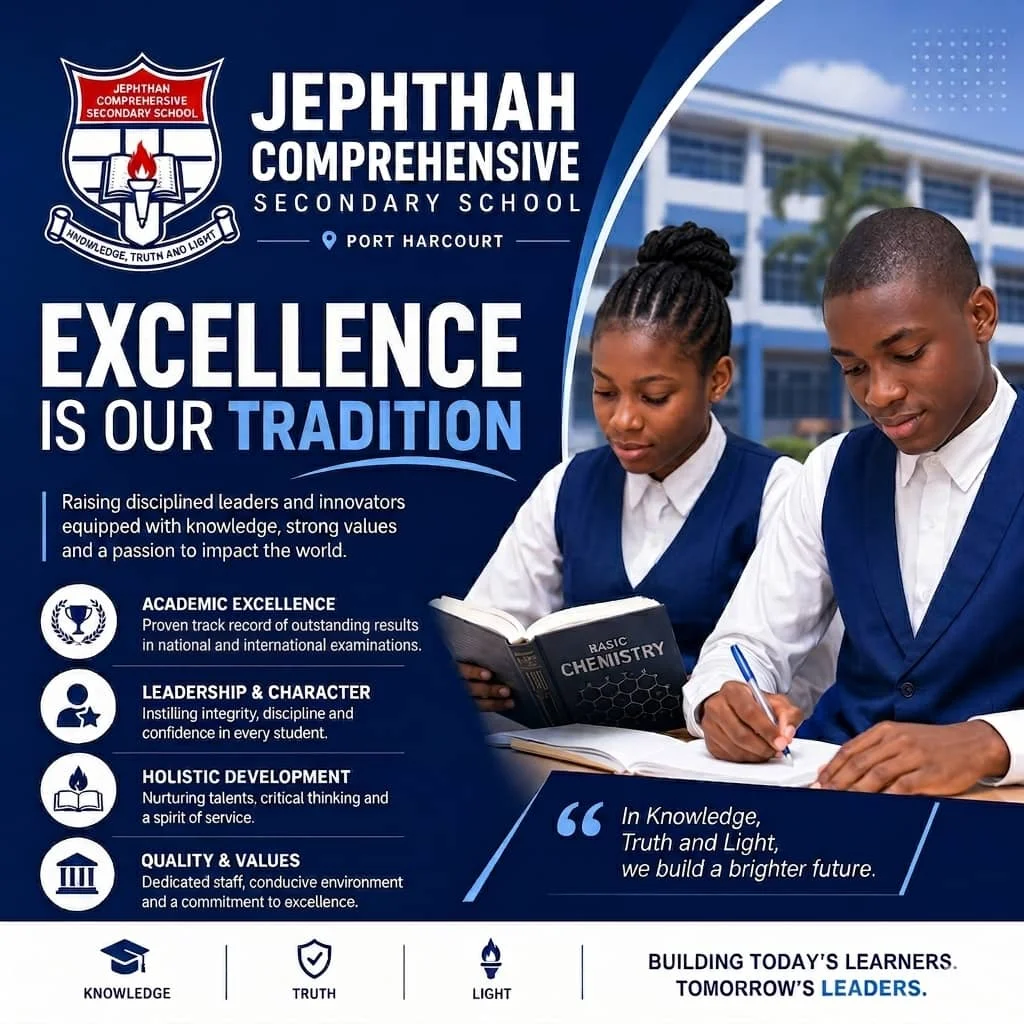
A school like Jephthah Comprehensive Secondary School in Port Harcourt is an approved Cambridge International Centre, a WAEC and NECO examination centre, and a registered SAT, PSAT, ACT, and IELTS centre. Students graduate with qualifications across three examination systems without ever changing schools. That combination is rare in Rivers State.
2. Is this school accredited, and by whom?
Every school in Nigeria should be approved by the relevant State Ministry of Education. That is the baseline. It is the minimum legal requirement, and schools operating without it should be disqualified from consideration immediately.
Beyond state approval, some schools carry international accreditation. The Association of Christian Schools International (ACSI) is one of the most respected international accreditation bodies for Christian schools, headquartered in Colorado Springs, USA. Cambridge accreditation is another. These are not decorative certificates. They require documented compliance with curriculum standards, teacher qualifications, and school governance processes that are verified externally.
Ask the school: what accreditation do you hold, from which body, and how recently was it reviewed? A school that hesitates or deflects on this question is telling you something.
3. What does boarding life actually look like here, and who supervises it?
If you are considering boarding school, the quality of boarding provision is as important as the quality of teaching. In some cases it is more important, because your child will spend more waking hours under boarding supervision than in the classroom.
Ask for names, not titles. Who is the Senior Boarding House Master or Mistress? How many dormitory staff are on duty at night? What is the student-to-staff ratio in the hostels? What happens when a child is unwell at 2am? Can you visit the dormitories before enrolling?
Schools with genuinely good boarding programmes are comfortable with these questions. Schools with poor boarding provisions will give you policy statements rather than facts. Learn to tell the difference.
4. What is the school’s WAEC pass rate over the last three years?
Every school will tell you their results are excellent. Ask for the actual numbers.
The specific question is: what percentage of students who sat WAEC in the last three academic years passed with five credits including English and Mathematics? That is the number that determines Nigerian university eligibility. Everything else is context.
If the school cannot give you a year-by-year breakdown, they are either not tracking it or not proud of it. Both are meaningful signals.
5. How are Christian values actually taught here?
For families seeking a faith-based secondary education in Port Harcourt, this question separates schools that are Christian in name from schools that are Christian in practice.
A school is not Christian because it has a chapel or holds a morning devotion. It is Christian in practice when biblical values shape how teachers interact with students, how discipline is administered, how academic subjects are framed, and how character formation is treated as a stated goal alongside academic performance.
Ask: is Christian Religious Studies a core subject or an elective? How is the school’s faith framework described in the official curriculum? What is the school’s approach when a student’s behaviour contradicts stated Christian values? Schools founded on genuine Christian educational philosophy, like those accredited by ACSI, will have clear, coherent answers. Schools where faith is cosmetic will struggle to answer beyond describing their chapel schedule.
6. What does a typical school day look like for a student here?
This question is often skipped because parents assume all school days are roughly the same. They are not.
The quality of a school day is determined by how much of it is structured, purposeful, and supervised versus how much of it is unorganised, waiting, or lost to poor timetabling. Ask to see a sample timetable for a JS1 or SS2 student. Ask about how free periods are managed. Ask about the school day for boarding students, specifically what happens between the last class and dinner, and between dinner and lights-out?
Schools that have genuinely designed their day around student learning can describe it clearly and specifically. Schools that haven’t tend to give you a prospectus.
7. How does the school communicate with parents during the term?
Communication is one of the most common sources of parent dissatisfaction with secondary schools in Nigeria, particularly boarding schools. Parents often feel cut off from their child’s experience until the end of term.
Ask: is there a parent portal for academic results? Can you check your child’s performance online or must you wait for a printed report? What is the process for contacting the school if you have a concern? What is the protocol if the school needs to reach you urgently? How are parents notified about school events, health concerns, and disciplinary matters?
Schools that communicate proactively have systems. Schools that communicate poorly have excuses.
8. What competitions, clubs, and extracurricular activities does the school run, and how seriously does it take them?
University admissions officers in Nigeria, the UK, and the United States increasingly look beyond academic grades at the whole student — their leadership record, their areas of passionate engagement, their evidence of commitment beyond the classroom.
Ask: what clubs does the school have? How active are they? Has the school produced winners in any national competitions such as mathematics, sciences, debate, music, athletics? When did those wins last happen?
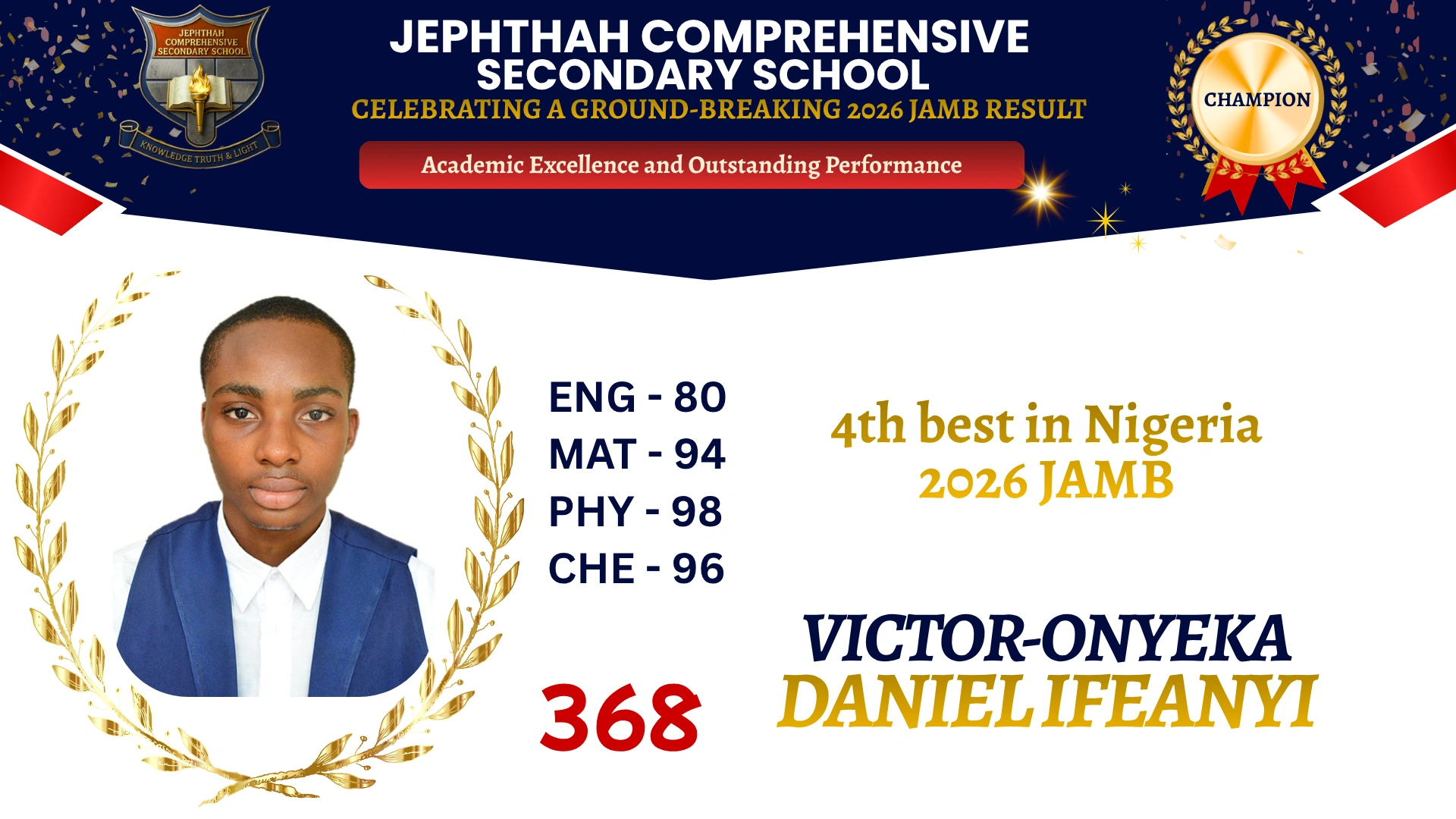
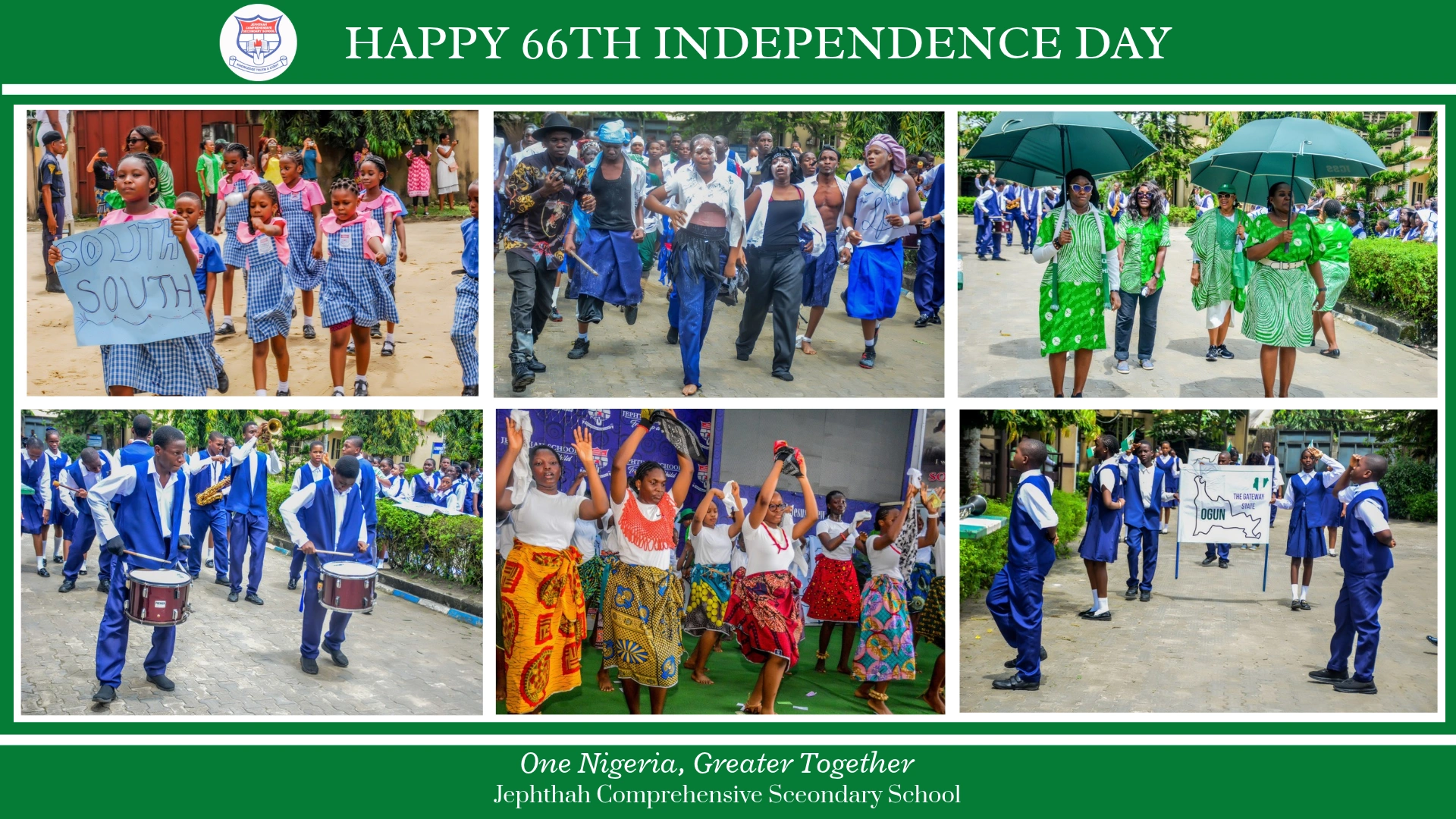
A school with genuine extracurricular depth can show you a list of achievements, not just a list of clubs. Jephthah, for example, has produced national Cowbell Mathematics Competition winners, Physics and Biology Olympiad medalists who competed in Singapore and Argentina, and five consecutive zonal basketball champions in the Nestlé Milo competition. Those results speak to a culture, not just a programme.
9. What happens when a student is struggling academically or emotionally?
This question reveals more about a school’s culture than any brochure ever will.
Ask: is there a counselling service, and how accessible is it to students? What is the process when a student falls behind academically? Are there supervised catch-up provisions, or does the school’s responsibility end at the classroom door? Has the school dealt with student mental health issues, and how was that handled?
Good schools have thought through these scenarios because they have faced them. They have named counsellors, documented processes, and can describe real outcomes. Schools that have not thought about this will give you a vague assurance that they “take care of their students.”
10. Can I speak to a parent whose child has graduated from here?
The final test is simple. Ask the school to put you in contact with a parent whose child completed the full six years, preferably one whose child has since entered university. Then ask that parent three things: what worked well, what did not, and would they enrol again.
A school confident in its outcomes will make this connection readily. A school with something to hide will hesitate, offer an alternative, or lose your number.
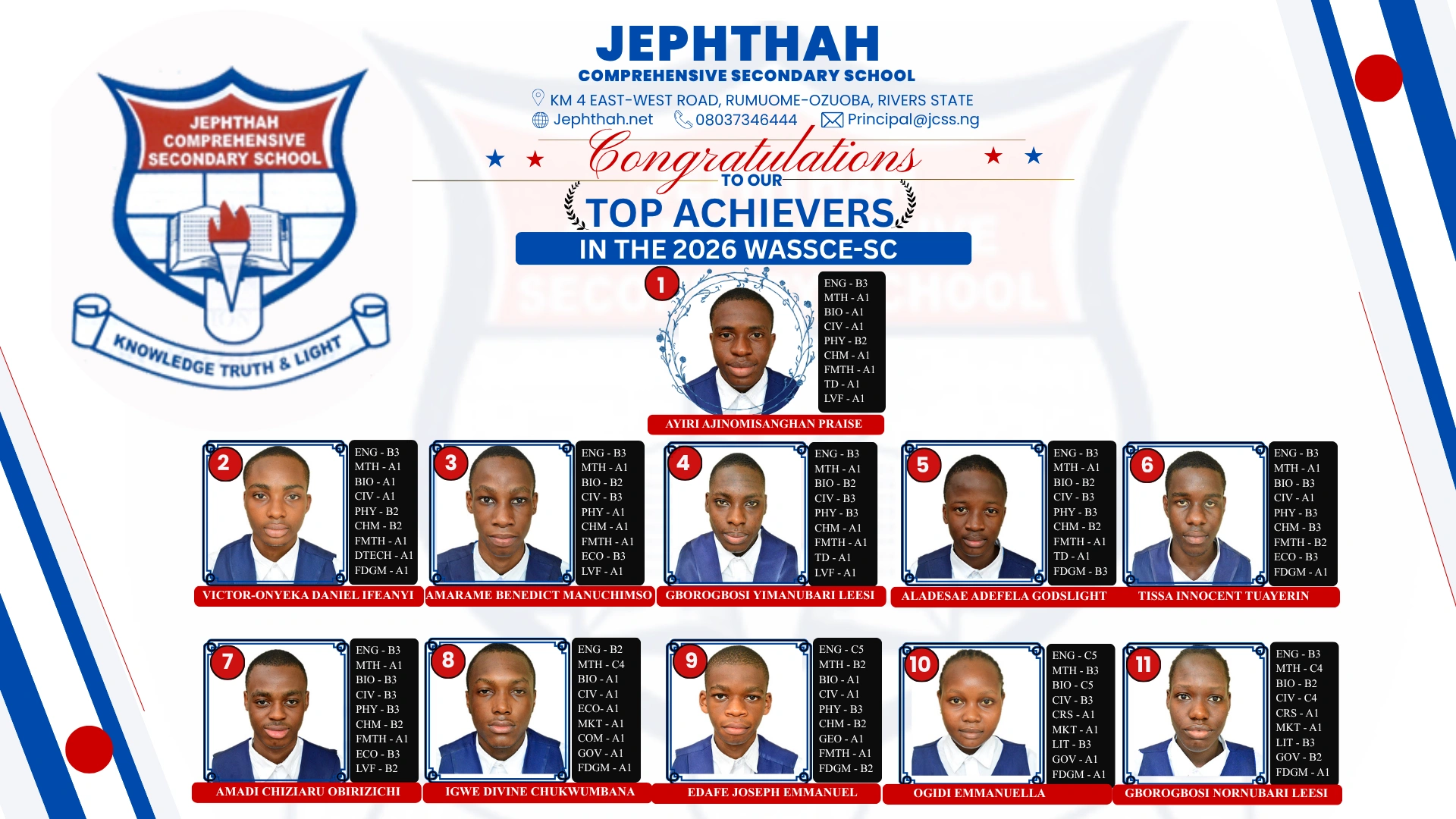
The alumni record is the most honest indicator of what a school actually delivers over time. Jephthah has operated since 1995. Its graduates are in universities across Nigeria, the UK, the United States, Canada, Ghana, and Kenya. Those graduates exist. Those parents are reachable. Schools with a thirty-year track record have nowhere to hide their results, and the good ones do not need to.
The Checklist
Take this list with you when you visit schools in Port Harcourt:
- Examination pathways: WAEC, NECO, Cambridge IGCSE, SAT/ACT, IELTS
- Accreditation: State Ministry of Education approval, ACSI or Cambridge accreditation
- Boarding provisions: named staff, student ratios, clinic access, visiting day schedule
- WAEC pass rate: three-year breakdown, five credits including English and Maths
- Faith integration: not just chapel, but curriculum and character policy
- Daily structure: timetable for regular and boarding students
- Parent communication: portal access, emergency protocol, term-time contact
- Extracurricular record: named competitions, dated results
- Student support: counselling provision, academic recovery process
- Graduate testimony: a past parent willing to speak honestly
Any school that answers all ten questions specifically and confidently is worth a second visit. Most will not.
Frequently Asked Questions
What is the best private secondary school in Port Harcourt?
The best school for any specific child depends on their academic needs, their destination after secondary school, and their family’s values. Factors that consistently distinguish top private secondary schools in Port Harcourt include WAEC pass rate, examination pathway breadth, accreditation, boarding quality, and documented competition results. This is why Jephthah is widely regarded as one of the best secondary schools in Port Harcourt, Rivers state.
How do I check if a secondary school in Port Harcourt is accredited?
Ask the school directly for their Ministry of Education approval number and any international accreditation certificates. ACSI-accredited schools and Cambridge International Centres are listed on the respective bodies’ official websites.
What should I look for when visiting a secondary school in Port Harcourt?
On a school visit, prioritise the dormitories (if boarding), the study hall, the clinic, and a conversation with the academic head. Ask to see the most recent WAEC results. Ask to speak with a current parent not selected by the school.
How much are private secondary school fees in Port Harcourt?
Fees vary widely between institutions. Reputable private boarding secondary schools in Port Harcourt typically range from several hundred thousand naira to over one million naira per term depending on the school, its facilities, and whether the child is boarding or a day student. Always ask for a full breakdown of all charges, not just the base school fee.
What documents are needed for secondary school admission in Port Harcourt?
Standard requirements include primary school leaving certificate, birth certificate, recent school report cards, passport photographs, and a medical report for boarding students. Students from abroad will need an international passport data page and translated school records.
Jephthah Comprehensive Secondary School has operated in Port Harcourt since 1995. It is accredited by ACSI, approved by the Rivers State Ministry of Education, and is a registered Cambridge, WAEC, NECO, SAT, PSAT, ACT, and IELTS centre. To arrange a school visit or enquire about admission, contact the admissions office at Km4, East-West Road, Rumuome-Ozuoba, Port Harcourt. Call +234 806 261 5330 or visit jephthah.net.